What Does the Hamsa Hand Mean?
The Hamsa hand is a symbol of protection, peace, and spiritual awareness. It is widely believed to guard against negative energy—often associated with the “evil eye”—while also representing openness, blessings, and inner balance.
At its core, the Hamsa is not just about protection from the outside world.
It is about creating a sense of calm and awareness within.
The Origin of the Hamsa Hand Symbol
Long before it became a decorative object or a piece of jewelry, the Hamsa existed as something simple and universal: an open hand.
Across ancient cultures in the Middle East and North Africa, an open palm carried a clear message:
I come in peace.
I mean no harm.
Over time, this gesture evolved into a symbol—one that represented not just communication, but intention. It became associated with protection, not through force, but through presence.
What makes the Hamsa unique is how it traveled across cultures without losing its essence. It has been embraced by different traditions, beliefs, and communities—each giving it a name, yet preserving its meaning.
An open hand.
Five fingers.
A quiet form of protection.
The Spiritual Meaning of the Hamsa Hand
The meaning of the Hamsa hand is layered, but at its heart are a few key ideas:
Protection
Often referred to as a Hamsa protection symbol, it is believed to shield against negativity and harmful intentions.
Awareness
Rather than simply blocking negativity, the Hamsa encourages awareness—helping you notice your thoughts, emotions, and surroundings.
Balance
The symmetry of the hand reflects harmony, grounding, and emotional stability.
Letting Go
Perhaps the most subtle meaning: an open hand does not hold tightly. It allows things to come and go.
In modern life, this meaning resonates deeply.
Not everything needs to be controlled.
Some things simply need to be released.
The Eye in the Hamsa: Meaning and Symbolism
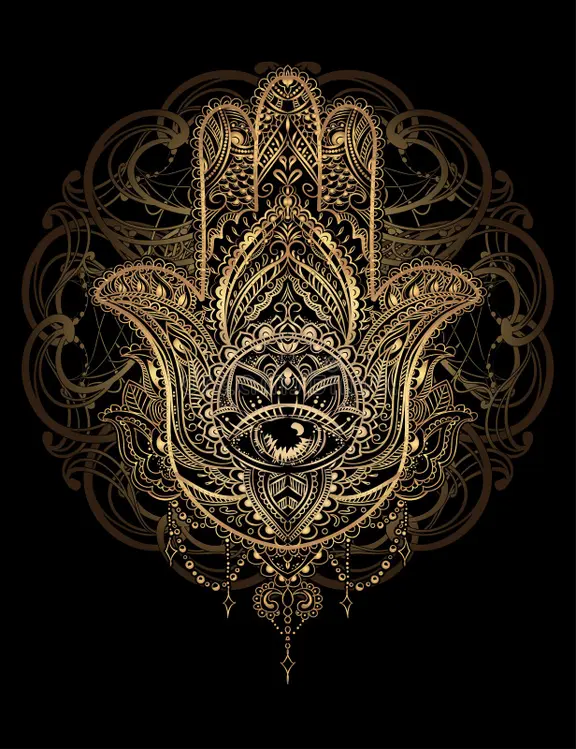
Many Hamsa designs include an eye at the center.
This is often connected to the concept of the evil eye—a belief found in many cultures that negative energy can be transmitted through intention or envy.
But the eye in the Hamsa is not aggressive.
It does not watch to judge.
It watches to protect and remind.
In a more reflective sense, the eye becomes a symbol of awareness:
- Seeing beyond the surface
- Noticing what is often ignored
- Returning attention inward
The protection it offers is not just external—it begins from within.
Is the Hamsa Hand Religious?
One of the most interesting aspects of the Hamsa is its universality.
It is used across multiple cultures and belief systems, yet it is not limited to any single one.
For some, it holds spiritual meaning.
For others, it is cultural.
And for many, it is simply symbolic.
This flexibility is part of its strength.
You do not need to follow a specific belief system to connect with the Hamsa.
Its meaning is not imposed—it is experienced.
Hamsa Hand in Modern Life
In today’s fast-paced world, symbols like the Hamsa are gaining new relevance.
Not because people are looking for more things—
but because they are looking for more meaning.
The Hamsa fits naturally into modern life as:
- A reminder to pause
- A symbol of calm in busy environments
- A small anchor in daily routines
It does not demand attention.
It simply exists—quietly influencing the atmosphere around it.
How to Use the Hamsa Hand in Daily Life
There are no strict rules for using the Hamsa.
And that is exactly why it works.
Over time, people begin to form small, personal rituals around it:
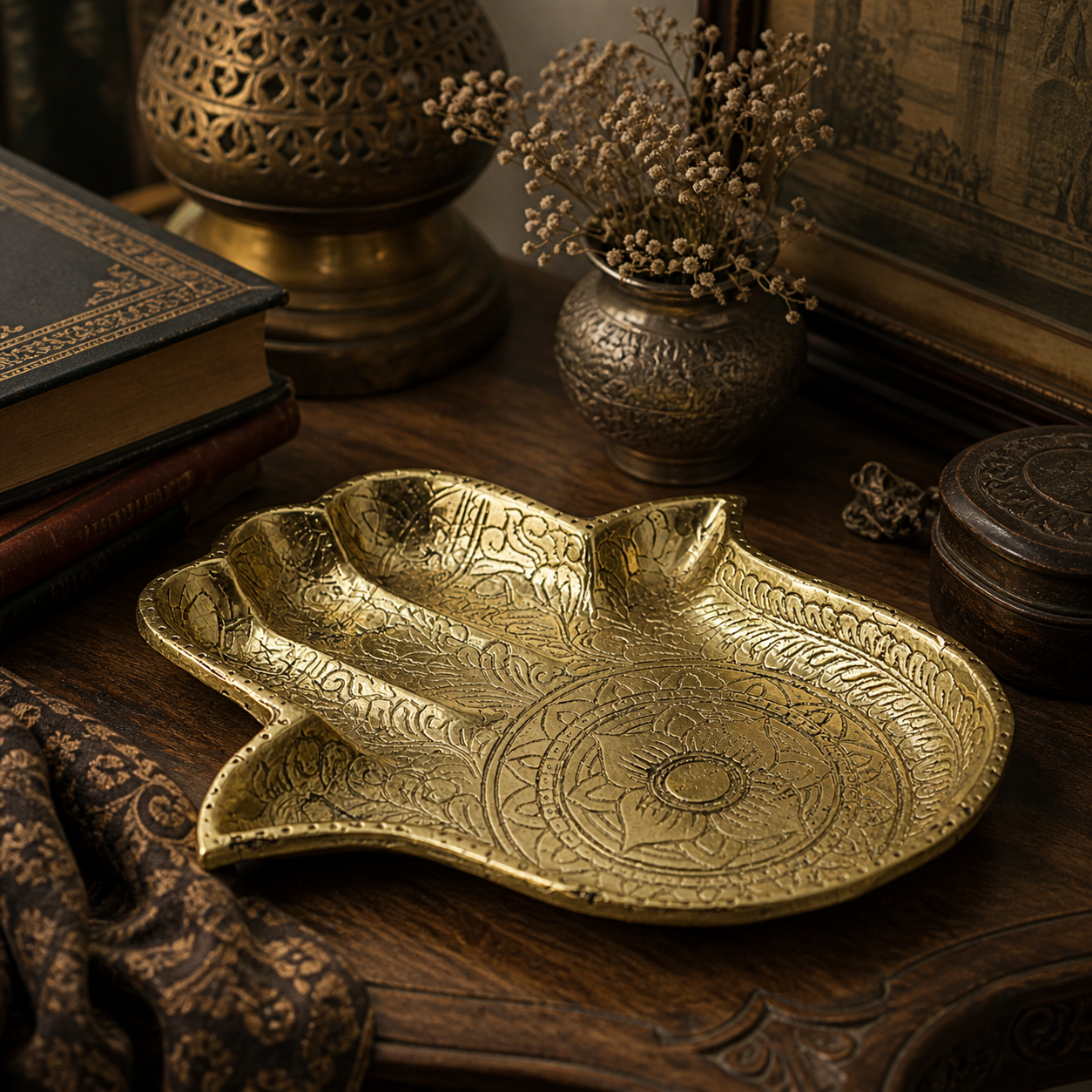
- Placing keys or small objects in a Hamsa-shaped dish at the end of the day
- Keeping it near an entryway as a symbolic transition between outside and inside
- Using it as a visual reminder to pause and reset
These actions may seem simple.
But repetition gives them meaning.
And meaning is what turns an object into something more.
Hamsa Hand in Home Decor: Meaning and Placement
As a piece of Hamsa hand decor, its role is subtle but powerful.
It is not meant to dominate a space.
It is meant to shape how a space feels.
Common placements:
- Near the entrance → symbolizing protection and welcome
- On a table or shelf → creating a calm focal point
- In a personal space → supporting reflection and stillness
Materials also play a role.
A brass Hamsa hand, for example, evolves over time.
Its surface changes, softens, and develops character—reflecting use, presence, and memory.
This makes it more than decorative.
It becomes something lived with.
For thoughtfully curated pieces that carry this kind of quiet meaning, you can explore collections like
Daun The Gift Shop
where objects are selected not just for appearance, but for the feeling they bring into a space.
Why the Hamsa Hand Still Resonates Today
In a world filled with constant stimulation, the appeal of the Hamsa is simple:
It offers stillness.
It does not compete with modern life.
It balances it.
People are no longer just collecting objects.
They are choosing what they want to live with.
And the Hamsa, with its quiet presence, fits naturally into that shift.
Frequently Asked Questions About the Hamsa Hand
What does the Hamsa hand mean?
The Hamsa hand symbolizes protection, peace, awareness, and balance. It is often associated with guarding against negative energy while encouraging mindfulness and calm.
Is the Hamsa hand good or bad?
The Hamsa is widely considered a positive symbol. It is associated with protection, blessings, and well-being across many cultures.
Which way should the Hamsa hand face?
Both directions carry meaning:
- Facing up → protection against negativity
- Facing down → openness, abundance, and receiving blessings
Can anyone use the Hamsa hand?
Yes. The Hamsa is a universal symbol and is not limited to a specific religion or belief system.
Is the Hamsa the same as the evil eye?
No. The Hamsa is a protective symbol, while the evil eye refers to negative energy. The eye within the Hamsa is often used as a protective element against it.
Final Reflection: The Meaning That Grows Over Time
The meaning of the Hamsa hand is not fixed.
It changes with context.
It deepens with experience.
It becomes part of your environment, your routine, your story.
At first, it may simply be an object.
Then, a symbol.
And eventually, something quieter:
A small moment of pause.
A place to set things down.
A reminder that not everything needs to be held onto.
Sometimes, meaning does not come from what something is—
But from what it quietly becomes, over time.