By: [Daun The Gift Shop]
For many travelers, returning to a place they once called home can feel strangely emotional. Streets that once seemed familiar suddenly look different. Buildings change, cafés disappear, and new businesses emerge where old memories used to live. Yet somehow, certain places still carry the same atmosphere that made people fall in love with them in the first place.
That was exactly what Ms. Tinny experienced when she returned to Sanur, Bali, in 2026.
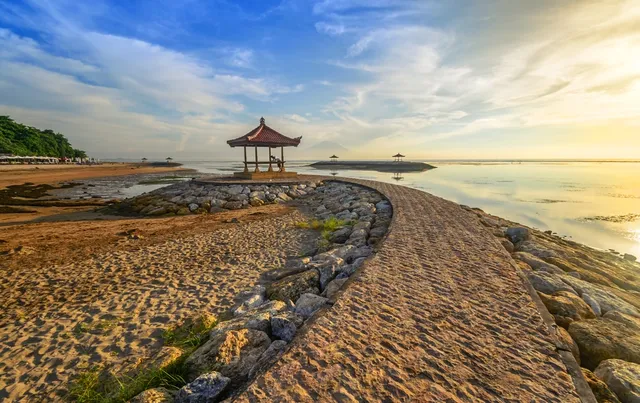
Originally from Bogor, Tinny had once spent part of her life living in Sanur back in 2013. At that time, Sanur was very different from the Bali many travelers know today. Compared to busy destinations like Kuta, Canggu, or Seminyak, Sanur felt slower, quieter, and deeply local. Life moved at a gentler pace.
“When I lived here years ago, Sanur felt peaceful in a very simple way,” Tinny recalled during our interview. “People woke up early, the beaches were calm, and you could spend hours just cycling around without feeling rushed.”
Back in 2013, Sanur was often associated with sunrise walks, traditional fishing boats, local warungs, and older-style Balinese hospitality. The tourism scene existed, but it had not yet fully transformed into the modern lifestyle destination it is becoming today.
Many visitors at the time came to Sanur specifically because it felt less crowded. Families, long-stay travelers, retirees, and artists often preferred the area because of its laid-back atmosphere. Mornings in Sanur usually started with people jogging along the beachfront pathway while local fishermen prepared their boats. Small cafés served traditional Balinese coffee and simple breakfasts, while souvenir shops mostly sold handmade crafts, paintings, wooden carvings, and textiles made by local artisans.
“There was something nostalgic about old Sanur,” Tinny said. “It wasn’t trying too hard to become trendy. It just felt authentic.”
During her years there, Tinny became attached to the rhythm of daily life in Sanur. She remembered afternoons spent near the beach, quiet evenings under yellow street lights, and the feeling of knowing almost every corner of the neighborhood.
But over the years, Bali changed rapidly.
Tourism evolved, international travelers increased, digital nomads began reshaping many parts of the island, and areas once considered quiet slowly developed into modern lifestyle destinations. Sanur was no exception.
So when Tinny returned in 2026 for a holiday, she arrived carrying two things at once: curiosity and nostalgia.
The moment she stepped into Sanur again, she immediately noticed the transformation.
The roads looked more organized. New cafés and creative spaces appeared almost everywhere. Boutique stores, wellness studios, artisan markets, and modern restaurants now stood alongside the traditional businesses that had existed for decades.
The beachfront areas had become cleaner and more pedestrian-friendly. Travelers walked comfortably along renovated pathways while cafés overlooked the sea with minimalist tropical interiors. Compared to 2013, Sanur now felt more connected to Bali’s growing creative and lifestyle scene.
Still, despite all the modernization, Tinny felt that Sanur had managed to preserve something important.
“It’s more modern now,” she said, “but it still feels calmer compared to many other places in Bali.”
That balance between old and new is perhaps what makes Sanur unique in 2026. Unlike some destinations that completely transformed under tourism development, Sanur still carries traces of its earlier identity. Traditional ceremonies continue to take place near the beach. Local communities remain active. Morning markets still operate. Small family-owned businesses still exist beside modern creative concepts.
And increasingly, those creative concepts are becoming part of Sanur’s identity.
One afternoon during her trip, Tinny decided to spend the day walking around the area without any schedule. She simply wanted to revisit the streets she once knew.
“I like walking without a plan,” she explained. “Sometimes that’s how you discover the best places.”
The weather that day was warm but pleasant. The streets were active with tourists, local residents, and people moving between cafés, boutiques, and beachside areas. As Tinny wandered through the neighborhood, something suddenly caught her attention.
Among the rows of shops and businesses stood a store with a warm, artistic atmosphere that immediately felt different from the others.
“That was my first impression,” she said. “The place looked beautiful from outside.”
The store was Daun The Gift Shop.
Unlike typical souvenir stores that focus mainly on quantity and tourism products, Daun The Gift Shop presented itself differently. The space felt curated, creative, and deeply connected to handmade craftsmanship. Wooden decorations, artisan products, handmade gifts, and artistic displays filled the store with warmth and personality.
From the outside alone, it was enough to make Tinny curious.
“At first I just wanted to look around for a few minutes,” she admitted. “But when I entered, I realized there was much more happening inside.”
As she explored the shop further, she noticed something unexpected: a workshop area where visitors were participating in creative activities.
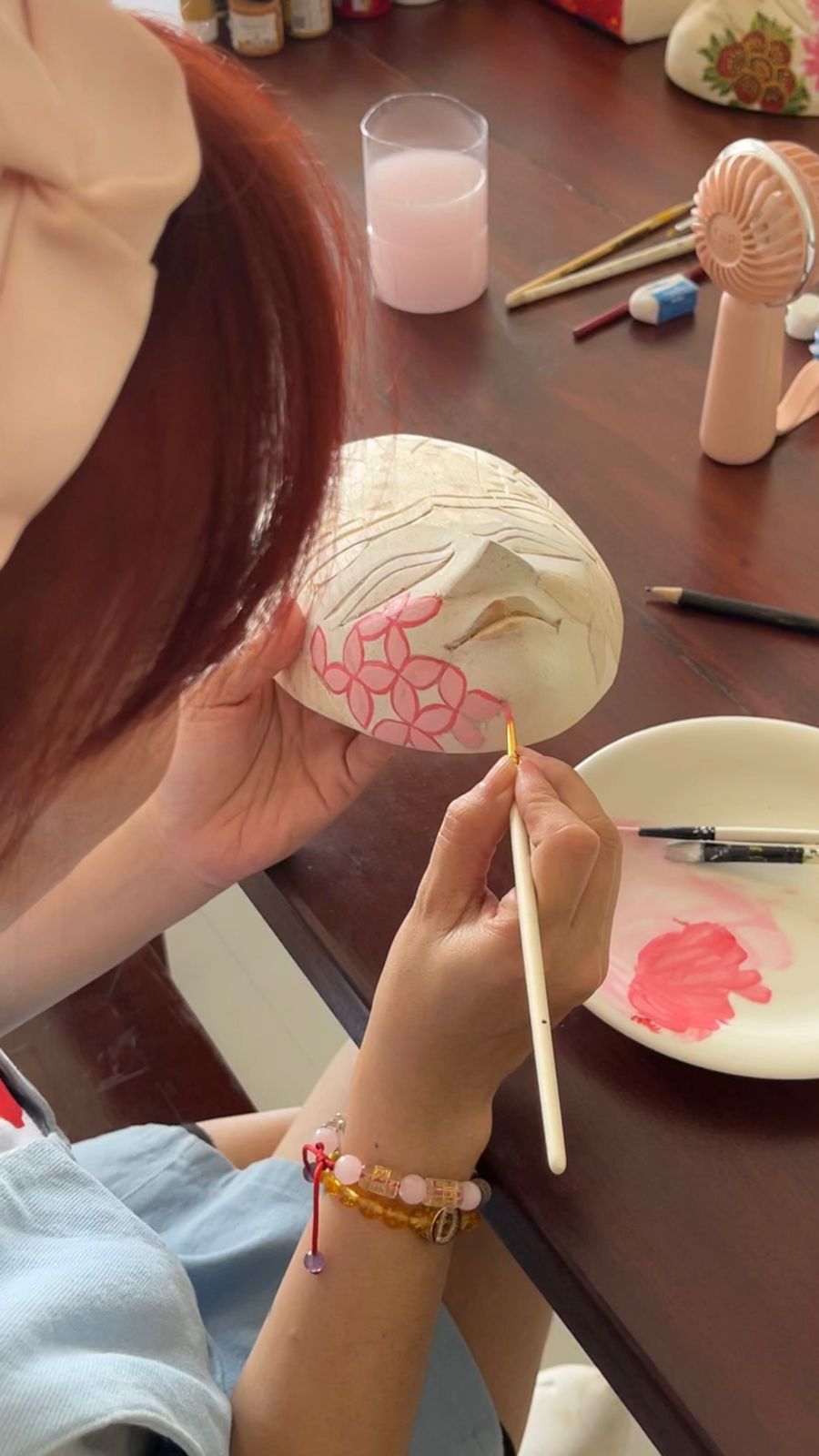
Some people were painting wooden masks. Others were making candles or working on handmade crafts while chatting casually around wooden tables. The atmosphere felt relaxed and welcoming rather than formal or commercial.
For Tinny, this immediately stood out.
“I think what caught my attention was how interactive it felt,” she said. “People weren’t only shopping. They were actually creating something.”
That moment reflects a larger shift happening not only in Sanur, but also across Bali’s tourism industry in recent years.
Travelers today increasingly seek experiences rather than just destinations. Instead of only visiting beaches or buying souvenirs, many tourists want to participate directly in cultural and creative activities. They want to feel connected to local traditions in a more personal way.
Creative workshops have become part of this new tourism experience.
At Daun The Gift Shop, visitors can join various hands-on workshops inspired by Balinese and Indonesian art traditions. Activities include wooden mask painting, traditional Balinese offerings (canang) workshops, candle making, bracelet making, paper quilling, and other creative experiences designed for beginners and casual travelers.
The concept feels simple, yet highly effective.
Rather than treating culture as something distant to observe, the workshops invite visitors to engage with it directly.
For Tinny, the wooden mask painting workshop instantly became the most interesting activity.
“I saw people painting and it looked really calming,” she said. “So I decided to join.”
She was then given a plain wooden mask along with paints, brushes, and complete creative freedom.
What makes the wooden mask painting workshop particularly unique is the way it combines traditional Indonesian cultural heritage with modern artistic expression. The masks themselves are inspired by traditional Indonesian and Balinese mask art, objects that historically carried cultural, spiritual, and storytelling significance within performances and ceremonies.
At the same time, the workshop introduces batik-inspired artistic elements into the experience.
Rather than creating conventional paintings, participants decorate the masks using patterns inspired by Indonesia’s long-standing batik tradition. Floral motifs, line work, geometric details, and ornamental patterns can all be incorporated into the designs. However, participants are also encouraged to reinterpret these traditional influences in modern ways using contemporary colors, illustrations, and creative ideas.
For Tinny, this combination made the activity feel much more meaningful than an ordinary art class.
“What makes it so interesting is that you’re combining cultural heritage with modern creativity,” she explained. “You can use traditional batik inspiration, but still create something personal with modern colors and designs.”
Some participants chose earthy traditional tones inspired by classic Indonesian textiles, while others experimented with bold modern palettes, abstract illustrations, or playful artistic concepts. The workshop gave complete freedom for self-expression while still maintaining a connection to Indonesian artistic heritage.
Tinny herself decided to paint floral batik-inspired details using soft pink pastel colors to create a calm and feminine aesthetic.
Slowly, the plain wooden mask transformed into a personalized artwork filled with character.
The freedom to combine heritage with creativity is what makes the workshop particularly attractive for modern travelers. Instead of presenting traditional culture as something rigid or untouchable, the activity allows people to engage with it in a fun, approachable, and interactive way.
Each finished mask becomes more than just a souvenir.
It becomes a reflection of personal creativity layered onto an object that already carries cultural meaning and artistic history.
According to Tinny, the workshop also felt surprisingly therapeutic.
“The atmosphere was very calming,” she said. “You don’t need to be a professional artist. Everyone just enjoys the process.”
As she painted, the atmosphere around the workshop became part of the experience itself. Travelers from different backgrounds sat together, sharing paint, exchanging ideas, laughing about mistakes, and enjoying the process without pressure.
There was no expectation to create perfect art.
That, according to Tinny, was what made the workshop memorable.
“Sometimes people are afraid to try creative things because they think they’re not talented enough,” she said. “But here, it felt very relaxed. Everyone could just explore their own style.”
In many ways, the workshop reflects the changing identity of Sanur itself.
Back in 2013, Sanur attracted people mainly because of its calm beaches and slower lifestyle. In 2026, those qualities still exist, but they are now accompanied by a growing creative culture.
The area is increasingly becoming a destination where travelers can combine relaxation with meaningful experiences. Wellness spaces, artisan stores, cultural workshops, and community-based tourism activities are shaping a more experience-oriented version of Sanur.
This evolution appeals strongly to modern travelers who value authenticity and emotional connection over conventional tourism.
Workshops like the ones at Daun The Gift Shop represent that shift perfectly.
Instead of simply purchasing a mass-produced souvenir, visitors leave with something they personally created. The object becomes attached to a memory, a conversation, and a moment in time.
For Tinny, the mask she painted eventually became more than just an artwork.
“It became part of the trip itself,” she said.
She described how the experience unexpectedly connected her old memories of Sanur with the newer version of the area she was seeing now.
“In 2013, I mostly remember Sanur for its peaceful atmosphere,” she reflected. “Now it still has that calm feeling, but there are more creative spaces where people can experience something.”
That combination may explain why Sanur continues attracting travelers despite Bali’s increasingly competitive tourism landscape.
Unlike fast-paced tourism hubs that constantly chase trends, Sanur seems to be evolving in a more balanced way—preserving its slower rhythm while embracing creativity, design, and experiential tourism.
As our interview continued, Tinny explained that one of the reasons she appreciated the workshop so much was because it felt genuinely human.
“In many tourist places, people just take photos and leave,” she said. “But here, you actually sit down, spend time, and interact with people.”
That interaction is increasingly valuable in modern tourism.
In an era dominated by fast content, social media trends, and quick travel itineraries, experiences that encourage people to slow down are becoming more meaningful. Workshops naturally create those moments. Participants spend time focusing, creating, and engaging with their surroundings rather than rushing to the next destination.
For some travelers, the activity may simply be entertaining. For others, it becomes unexpectedly therapeutic.
Tinny admitted she felt surprisingly relaxed during the painting process.
“You focus on small details, colors, patterns,” she said. “After a while, you stop thinking about everything else.”
That calming effect has also contributed to the growing popularity of creative workshops globally. Activities involving painting, crafting, and handmade art are increasingly associated with mindfulness, stress relief, and emotional well-being.
In Bali specifically, these workshops also offer something additional: cultural context.
Participants are not simply painting random objects. They are interacting with artistic traditions that have existed in Indonesian culture for generations.
That cultural layer gives the experience greater depth.
As the afternoon progressed, Tinny continued adding details to her wooden mask while conversations flowed naturally around the workshop tables. Some visitors discussed their travels around Bali. Others talked about art, culture, or their first experiences trying creative activities.
By the end of the session, the once plain wooden mask had transformed completely.
Soft floral patterns decorated the surface while subtle batik-inspired elements reflected Tinny’s personal style.
Looking at the finished piece, she smiled.
“I didn’t expect a random walk in Sanur to become one of the most memorable parts of my holiday,” she said.
And perhaps that is exactly what makes places like Daun The Gift Shop increasingly relevant in today’s Bali.
Modern travelers are no longer satisfied with simply visiting destinations. They want stories. They want participation. They want experiences that feel personal enough to remember long after the trip ends.
For Tinny, the experience represented more than a workshop.
It became a meeting point between memory and change.
Between the Sanur she remembered from 2013 and the Sanur she encountered again in 2026.
A quieter past connected unexpectedly with a more creative present—all through a simple afternoon of painting a wooden mask inside a small artisan workshop.
As she carefully packed the finished mask before leaving, Tinny paused for a moment and looked around the workshop space once more.
“Sanur changed a lot,” she said softly. “But maybe this is what makes it interesting now. It still feels warm, but there are more ways for people to experience it.”
And in many ways, that single sentence perfectly captures the new identity of Sanur today.